Need help with booking? Send us a message.
The Everest Three Passes Trek is the ultimate adventure for trekkers seeking a thrilling and immersive journey through the heart of the Everest region. This trek is considered one of the most challenging yet rewarding treks in Nepal, offering breathtaking views of the Himalayan peaks, remote trails, traditional Sherpa villages, and the chance to cross three high mountain passes—Kongma La Pass (5,535m), Cho La Pass (5,420m), and Renjo La Pass (5,360m). Unlike the classic Everest Base Camp Trek, the Three Passes Trek provides a complete circuit around the Khumbu Valley, allowing trekkers to experience stunning glaciers, turquoise lakes, and lesser-known trails beyond the typical Everest routes.
The journey begins with a thrilling flight from Kathmandu to Lukla (2,860m), followed by a trek through lush forests, crossing the Dudh Koshi River on suspension bridges, and passing picturesque villages such as Phakding (2,610m) and Namche Bazaar (3,440m), the bustling capital of the Sherpa community. After acclimatizing in Namche, trekkers continue to Tengboche (3,860m), home to the famous Tengboche Monastery, where the backdrop of Ama Dablam, Everest, and Lhotse creates a mesmerizing view. The trail then ascends to Dingboche (4,410m) and Chhukung (4,730m), where the real challenge begins with the first high pass, Kongma La (5,535m), which offers a rugged and adventurous ascent before descending to Lobuche (4,910m). From here, the trek leads to the iconic Everest Base Camp (5,364m), the ultimate dream destination for many trekkers, followed by a morning hike to Kala Patthar (5,545m), the best viewpoint for a close-up panorama of Mount Everest. The journey continues through Dzongla (4,830m) before crossing the icy and steep Cho La Pass (5,420m), leading to the pristine Gokyo Lakes (4,790m), one of the most stunning locations in Nepal.
A side trek to Gokyo Ri (5,357m) provides breathtaking 360-degree views of Everest, Cho Oyu, Lhotse, and Makalu. The final pass, Renjo La (5,360m), rewards trekkers with an incredible perspective of the Gokyo Valley and Everest region, before descending to Lungden (4,380m) and eventually making the way back to Namche Bazaar and Lukla. The trek concludes with a scenic flight back to Kathmandu. The Everest Three Passes Trek is best done in spring (March-May) or autumn (September-November) when the weather is stable, and visibility is clear. Due to its high altitude and physically demanding routes, it is recommended for experienced trekkers with good fitness levels. Proper acclimatization, hydration, and gradual ascent are essential to avoid altitude sickness. This trek is an unparalleled adventure for those seeking the ultimate Himalayan trekking experience, combining high-altitude challenges, stunning landscapes, cultural encounters, and unforgettable moments in the world’s most iconic mountain region. Whether you’re an experienced trekker looking for a challenge or a passionate traveler aiming to explore the raw beauty of the Everest region, the Three Passes Trek offers an unparalleled adventure filled with breathtaking landscapes, cultural immersion, and the thrill of conquering three of Nepal’s most famous high-altitude passes.
An early morning scenic 30-minute flight to Lukla offers breathtaking views of the Himalayas. Upon landing at the Tenzing-Hillary Airport, you will meet the trekking team and begin a gentle descent towards Phakding, following the Dudh Koshi River. Along the way, enjoy views of terraced fields, small Sherpa villages, and Buddhist prayer wheels. Overnight at a teahouse in Phakding.
Today’s trek follows the Dudh Koshi River, crossing several suspension bridges, including the famous Hillary Suspension Bridge. The route passes through Monjo, the entrance to Sagarmatha National Park, where permits are checked. A challenging climb through pine forests leads to the bustling Namche Bazaar, the gateway to the Everest region. Overnight at a teahouse in Namche.
To adjust to the altitude, we take an acclimatization hike to Everest View Hotel (3,880m) for panoramic views of Everest, Lhotse, Ama Dablam, and Thamserku. You can explore the Sherpa Museum, visit the local market, or relax in one of Namche’s famous cafés. Overnight at a teahouse in Namche.
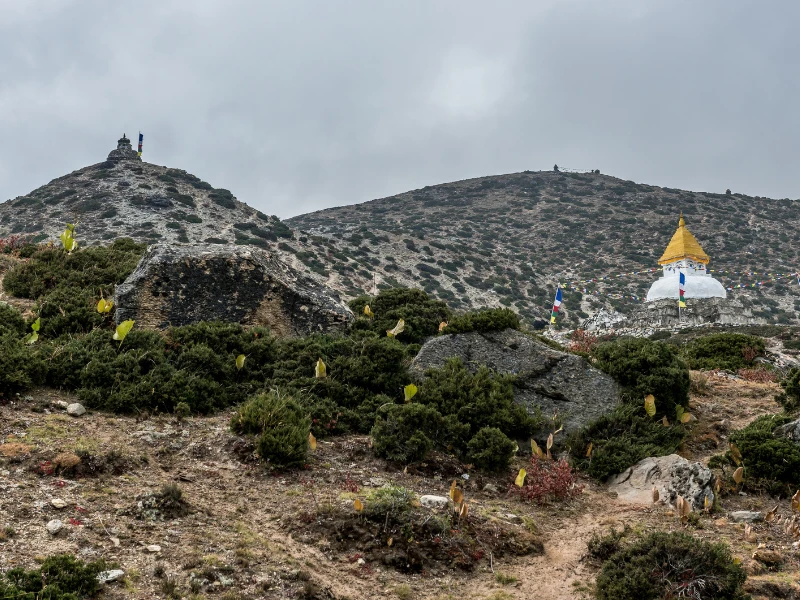
The trail offers breathtaking views of Everest and Ama Dablam, with a gradual descent to Phunki Tenga before a steep climb to Tengboche Monastery, the largest monastery in the Khumbu region. The monastery offers a stunning backdrop of Ama Dablam. Overnight at a teahouse in Tengboche.
Descending through rhododendron forests, we pass Pangboche, the highest permanent Sherpa village. Continuing along the Imja Khola, we arrive at Dingboche, a beautiful village with stunning views of Ama Dablam and Island Peak. Overnight at a teahouse in Dingboche.
To adapt to the altitude, we take an optional hike to Nangkartshang Peak (5,083m), offering breathtaking views of Makalu, Island Peak, and Lhotse. Overnight at a teahouse in Dingboche.
A short but scenic trek leads to Chhukung, a small settlement at the base of Island Peak. Here, we prepare for the first pass crossing the next day. Overnight at a teahouse in Chhukung.
Today is a challenging day as we cross the highest pass of the trek, Kongma La Pass. The ascent is steep and demanding, but the view from the top is rewarding. After descending, we reach Lobuche, near the Khumbu Glacier. Overnight at a teahouse in Lobuche.
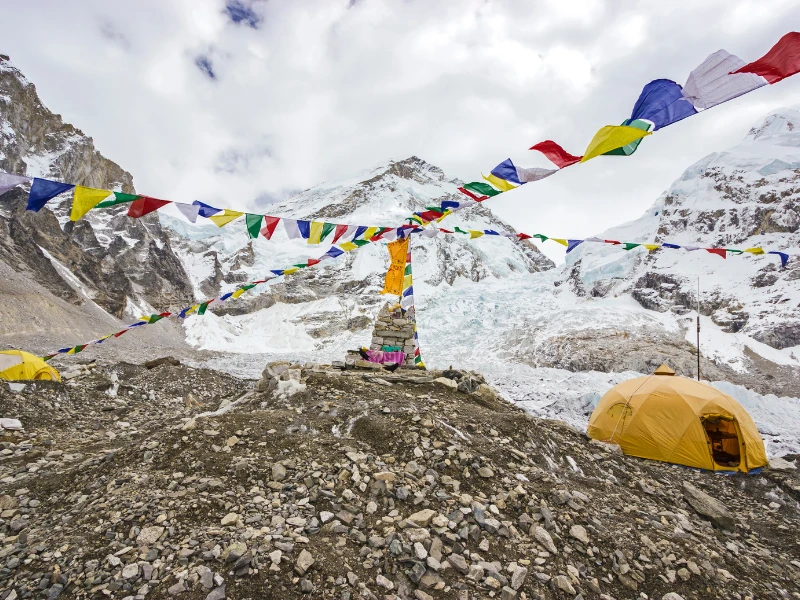
A gradual ascent along the moraine of the Khumbu Glacier leads to Gorak Shep, the last settlement before Everest Base Camp. After dropping our bags, we continue to Everest Base Camp, where climbers prepare for Everest expeditions. Spend some time exploring the area before returning to Gorak Shep. Overnight at a teahouse in Gorak Shep.
A pre-dawn hike to Kala Patthar offers the best sunrise view of Mount Everest and a 360-degree Himalayan panorama. After soaking in the views, we descend to Gorak Shep for breakfast before trekking to Dzongla, passing stunning glacial lakes along the way. Overnight at a teahouse in Dzongla.
The ascent to Cho La Pass is steep, requiring careful navigation through rocky and icy terrain. After crossing the pass, we descend to Thangnak, near the Ngozumpa Glacier, the longest glacier in Nepal. Overnight at a teahouse in Thangnak.
A short trek takes us across the Ngozumpa Glacier to reach Gokyo, home to the turquoise blue Gokyo Lakes. Overnight at a teahouse in Gokyo.
An early morning hike to Gokyo Ri provides spectacular views of Everest, Cho Oyu, Makalu, and Lhotse. The rest of the day is spent exploring the beautiful Gokyo Lakes. Overnight at a teahouse in Gokyo.
The ascent to Renjo La Pass is steep but rewards us with one of the best panoramic views of Everest and Gokyo Lakes. A long descent leads to the remote village of Lungden. Overnight at a teahouse in Lungden.
Today’s trail follows an off-the-beaten-path route back to Namche Bazaar, passing traditional Sherpa villages and ancient trade routes. Overnight at a teahouse in Namche.
The final day of trekking retraces our steps along the Dudh Koshi River, crossing suspension bridges and dense forests before arriving in Lukla. Celebrate the completion of the trek with the team. Overnight at a teahouse in Lukla.
An early morning scenic flight takes us back to Kathmandu. The rest of the day is free to explore the city, visit temples, or enjoy local cuisine. Overnight at a hotel in Kathmandu.
After an incredible Himalayan adventure, transfer to Tribhuvan International Airport for your onward journey, taking unforgettable memories of the Everest Three Passes Trek with you.


Your Start Date is the day you land in Nepal, and your End Date is when you fly home.
If the set Everest Three Passes Trekking group dates don’t suit your schedule, we can offer alternative dates upon request.
Proper layering is key to staying warm and comfortable in rapidly changing Himalayan weather.
Comfortable, reliable footwear ensures a smooth trekking experience.
The right gear ensures safety, comfort, and preparedness throughout the trek.
Lightweight but essential items that keep you clean, healthy, and comfortable.
Always keep important items easily accessible and protected.
The Everest Three Passes Trek is an adventurous and challenging trekking route in the Everest region, crossing three high mountain passes: Kongma La (5,535m), Cho La (5,420m), and Renjo La (5,360m). This trek offers stunning views of the Himalayas, including Mount Everest, and takes you through remote Sherpa villages and pristine landscapes.
The Everest Three Passes Trek is considered strenuous and suitable for experienced trekkers with good physical fitness. It involves long days of trekking, steep ascents and descents, and high-altitude conditions. Prior trekking experience and proper acclimatization are recommended.
The standard duration for the Everest Three Passes Trek is around 18-21 days, depending on the itinerary, acclimatization days, and weather conditions.
Yes, Mission Nepal Holidays offers customizable itineraries based on your preferences, time frame, and fitness level.
The best seasons for the Everest Three Passes Trek are:
Spring (March-May): Clear skies, blooming rhododendrons, and moderate temperatures.
Autumn (September-November): Stable weather, crisp views, and pleasant temperatures. Winter (December-February) is extremely cold, and monsoon (June-August) brings heavy rainfall, making the trek more challenging.
Sagarmatha National Park Entry Permit
Khumbu Pasang Lhamu Rural Municipality Permit These permits can be arranged by Mission Nepal Holidays as part of your trekking package.
ou can book the trek by contacting us through our website, email, or phone. We offer group departures as well as private trekking experiences.
info@missionnepal.com – +977 98514 22103
For further inquiries, feel free to contact Mission Nepal Holidays. We look forward to guiding you on an unforgettable adventure through the Everest Three Passes!
Accommodation is primarily in teahouses or lodges along the trekking route. The teahouses offer basic facilities, including a bed, blankets, and shared bathrooms. In higher altitudes, the facilities may be more basic.
eahouses offer a variety of meals, including:
Dal Bhat (rice and lentils)
Noodles and soups
Momos (dumplings)
Porridge and pancakes
Tea, coffee, and hot drinks Vegetarian options are widely available, but variety decreases at higher altitudes.
Warm clothing (down jacket, fleece, thermal layers)
Sturdy trekking boots
Sleeping bag (-20°C recommended)
Trekking poles
Sunglasses and sunscreen
First aid kit and altitude sickness medication
Snacks and water purification tablets
Yes, altitude sickness is a potential risk. To minimize the risk:
Acclimatize properly by following a gradual ascent
Stay hydrated and avoid alcohol
Listen to your guide and take rest days when needed Mission Nepal Holidays ensures proper acclimatization days in the itinerary to help trekkers adjust to high altitudes.
Yes, comprehensive travel insurance covering emergency evacuation, medical expenses, and high-altitude trekking is mandatory for this trek.
In case of an emergency, our guides are trained in first aid and altitude sickness management. Evacuation via helicopter rescue is available if needed, which is why travel insurance is required.
While it is possible to trek solo, hiring a licensed guide and porter from Mission Nepal Holidays ensures safety, navigation, and a more enriching experience. Our experienced guides provide support, insights, and assistance throughout the trek.
The trek starts from Lukla, which is accessible by a domestic flight from Kathmandu. Flights to Lukla are subject to weather conditions, and delays are common. Alternatively, trekkers can take a longer route via Jiri or Salleri.

| No of people | Price per person |
|---|---|
| 1 - 1 | $1,785 |
| 2 - 5 | $1,599 |
| 6 - 9 | $1,585 |
| 10 - 15 | $1,565 |
| 16 - 20 | $1,545 |

| No of people | Price per person |
|---|---|
| 1 - 1 | $1,999 |
| 2 - 5 | $1,799 |
| 6 - 9 | $1,785 |
| 10 - 15 | $1,765 |
| 16 - 20 | $1,745 |