Join Kailash Mansarovar Yatra 2026.
Kailash Yatra Guide
Share: Print

Annapurna Base Camp Trek

12
Days
11
Nights
From US$ 999
US$ 915
Save
US$ 84
Group Discounts Available
  • 1 - 1 pax
    US$ 999
  • 2 - 5 pax
    US$ 915
  • 6 - 9 pax
    US$ 900
  • 10 - 15 pax
    US$ 885
  • 16 - 20 pax
    US$ 865
Book Now

Need help with booking? Send us a message.

Destination
Nepal
Activities
Trekking and Hiking
Group size
1 - 30
Max. elevation
4130 m / 13549 ft
Difficulty
Moderate
Best season
Mar - May, Sep - Nov
Starts and ends
Kathmandu / Kathmandu
Transportation
All ground transportation as per itinerary.
Accommodation
Hotel in Kathmandu and Pokhara and Lodge during the trek.
Meals
Breakfast in Kathmandu and all meals during the trek.

Highlights

  • Unmatched Mountain Views: Get up close with towering peaks like Annapurna I, Machapuchare (Fishtail), Hiunchuli, and Dhaulagiri.
  • Diverse Landscapes: Trek through terraced fields, lush subtropical and rhododendron forests, alpine meadows, glacial valleys, and waterfalls.
  • Sunrise at Poon Hill: Witness a breathtaking Himalayan sunrise with panoramic views of Annapurna, Dhaulagiri, and Machapuchare.
  • Cultural Insights: Experience the warmth of the Gurung and Magar communities, exploring traditional villages, local festivals, and homestays.
  • Relax in Natural Hot Springs: Rejuvenate in the soothing natural hot springs at Jhinu Danda after a long day of trekking.
  • Rich Biodiversity: Spot rare wildlife such as Himalayan tahr, musk deer, langurs, and a variety of native birds along the trails.
  • Glacial Valleys & Machapuchare Base Camp: Explore high-altitude glacial valleys and visit Machapuchare Base Camp en route to ABC.
  • Photographer’s Paradise: Every step offers opportunities to capture stunning landscapes, waterfalls, and snow-capped peaks.

Overview

The Annapurna Base Camp Trek offers a magical experience for trekkers, combining stunning Himalayan views, cultural immersion, and diverse landscapes. Whether you’re a seasoned trekker or a beginner seeking a challenge, this trek has something for everyone.

Book your Annapurna Base Camp Trek today and embark on a life-changing adventure in the heart of the Himalayas!

The Annapurna Base Camp Trek (ABC Trek) is one of the most renowned trekking routes in Nepal, offering trekkers a once-in-a-lifetime opportunity to witness some of the world’s highest peaks. Located in the heart of the Annapurna Conservation Area, the trek takes you through a variety of landscapes, from lush subtropical forests to alpine meadows, with stunning views of Annapurna I (8,091m), Machapuchare (6,993m), and Dhaulagiri.

This moderately challenging trek combines adventure, culture, and breathtaking natural beauty. It’s accessible to trekkers with moderate fitness levels and requires no technical climbing skills, making it perfect for both beginners and experienced trekkers.

Annapurna Base Camp Trek Itinerary Overview

The Annapurna Base Camp Trek, organized by Mission Nepal Holidays, is one of the most iconic trekking experiences in Nepal. This trek takes you through diverse landscapes, from lush subtropical forests and terraced fields to high-altitude alpine terrain, culminating at the base of the majestic Annapurna Massif. It offers trekkers the opportunity to experience traditional Gurung and Magar villages, local culture, and hospitality along the way. The trek is designed for adventurers who want to witness panoramic views of Annapurna I, Machapuchare (Fishtail), Hiunchuli, and Dhaulagiri up close, all while trekking through a stunning variety of landscapes.

Starting from Nayapul or Pokhara, trekkers journey through charming villages like Tikhedhunga, Ghorepani, Chhomrong, and Bamboo, passing through dense rhododendron forests and terraced fields. One of the highlights is the sunrise at Poon Hill, which provides a breathtaking panoramic view of the Himalayas. The trek reaches its peak at Annapurna Base Camp (4,130m), a place surrounded by towering peaks, glaciers, and dramatic landscapes. This trek is perfect for trekkers seeking adventure, cultural immersion, and nature at its finest.

Highlights of Annapurna Base Camp Trek:

  • Panoramic views of Annapurna, Machapuchare, and Dhaulagiri
  • Sunrise at Poon Hill
  • Traditional Gurung and Magar villages
  • Scenic trekking through forests, waterfalls, and terraced landscapes
  • Natural hot springs at Jhinu Danda

Best Season for Annapurna Base Camp Trek

The best times to trek the Annapurna Base Camp are spring (March to May) and autumn (September to November). These months offer stable weather, clear skies, and breathtaking mountain views. Spring brings blooming rhododendrons, lush green forests, and moderate temperatures, making the trail vibrant and picturesque. Autumn, on the other hand, provides crisp air and excellent visibility of the Himalayan peaks, making it ideal for photography and high-altitude trekking.

While winter (December to February) is possible, trekkers should be prepared for cold temperatures, especially at higher altitudes, and occasional snowfall on the trails. The monsoon season (June to August) is generally not recommended due to heavy rainfall, landslides, and slippery trails, which can make trekking unsafe. Planning your trek with Mission Nepal Holidays during the optimal seasons ensures better weather, fewer crowds, and a more enjoyable trekking experience.

Short Points – Best Season:

  • Spring (March to May) – blooming flowers, moderate temperature
  • Autumn (September to November) – clear skies, peak visibility
  • Winter (December to February) – cold but possible
  • Monsoon (June to August) – heavy rain, slippery trails, less recommended

Annapurna Base Camp Trek Difficulty and Transportation

The Annapurna Base Camp Trek is classified as moderate difficulty, making it suitable for both beginners and experienced trekkers. While it doesn’t require technical climbing skills, it does demand good physical fitness and endurance. Trekkers should be prepared for daily hikes ranging from 4 to 7 hours, steep ascents, and the challenge of high-altitude trekking. Gradual acclimatization along the trail, especially at Ghorepani, Tadapani, and Chhomrong, is crucial to avoid altitude sickness.

Transportation for the trek usually begins with a scenic drive or short flight from Kathmandu to Pokhara. From Pokhara, trekkers are driven to Nayapul, the starting point of the trek. The journey through winding mountain roads offers stunning views of rivers, valleys, and rural landscapes. On the trek itself, all movement is by foot, providing an immersive experience with nature. Mission Nepal Holidays ensures all logistics are handled, including transportation, guiding services, and porters to carry luggage, making the trek comfortable and safe.

Key Points – Difficulty & Transportation:

  • Moderate trekking difficulty, no technical skills required
  • Daily hiking: 4–7 hours
  • Steep ascents and descents
  • Altitude acclimatization required
  • Transport: Drive/fly Kathmandu to Pokhara, drive to Nayapul

Food and Accommodation for Annapurna Base Camp Trek

During the Annapurna Base Camp trek, food and accommodation are primarily in tea houses and lodges, which provide a comfortable and authentic trekking experience. Tea houses typically offer basic rooms with beds and shared bathrooms, while higher-end lodges may include private rooms with hot showers. The quality of accommodation improves as trekkers descend from higher altitudes. Trekkers can expect to stay in cozy villages surrounded by serene mountain landscapes.

Food along the trek is simple yet nourishing. Local Nepali dishes such as dal bhat (rice and lentil soup), momo (dumplings), and vegetable curries are widely available. Western options like pasta, noodles, and sandwiches are also offered in most tea houses. Staying hydrated and eating well is essential, especially at high altitudes. Mission Nepal Holidays ensures trekkers have access to hygienic meals and comfortable lodging throughout the journey.

Short Points – Food & Accommodation:

  • Tea houses and lodges with basic to moderate amenities
  • Local Nepali dishes: dal bhat, momo, curry
  • Western meals available in most villages
  • Hot showers available at select lodges
  • Comfortable lodging with mountain views

Annapurna Base Camp Trek Permits

To trek to Annapurna Base Camp, certain permits are mandatory. These permits are required to enter the Annapurna Conservation Area and to ensure trekkers are officially registered for safety purposes. Mission Nepal Holidays assists trekkers with obtaining these permits to ensure a smooth trekking experience.

The required permits include:

  • Annapurna Conservation Area Permit (ACAP): Grants access to the protected area and contributes to local conservation efforts.
  • Trekkers’ Information Management System (TIMS) Card: Required for trekking in most regions of Nepal, ensuring safety and registration of trekkers.

These permits are generally obtained in Kathmandu or Pokhara before starting the trek, and Mission Nepal Holidays handles the documentation to make the process hassle-free. Carrying these permits is mandatory and may be checked at various points along the trail.

Short Points – Permits:

  • Annapurna Conservation Area Permit (ACAP)
  • Trekkers’ Information Management System (TIMS) Card
  • Required for trekking and safety registration
  • Handled by Mission Nepal Holidays

Why Choose Annapurna Base Camp Trek

The Annapurna Base Camp Trek is ideal for adventurers, nature lovers, and cultural enthusiasts. The trek offers unparalleled mountain scenery, immersive cultural experiences, and a sense of accomplishment when reaching ABC, surrounded by some of the world’s highest peaks. Unlike other treks, it combines moderate difficulty with high reward, offering an accessible yet thrilling Himalayan experience.

Choosing Mission Nepal Holidays ensures a professional and well-organized trek. From arranging permits, guiding services, and transportation to providing comfortable tea house accommodation and nutritious meals, the company prioritizes trekkers’ safety, comfort, and overall experience. Their knowledgeable guides share insights about local culture, wildlife, and geography, making the journey educational as well as adventurous. With expert support and well-planned itineraries, trekkers can focus on enjoying the scenery, photography, and the unforgettable experience of walking in the Annapurna region.

Short Points – Why Choose ABC Trek with Mission Nepal Holidays:

  • Stunning Himalayan views and Poon Hill sunrise
  • Cultural immersion in Gurung and Magar villages
  • Moderate trekking difficulty for adventurous travelers
  • Expert guides and organized logistics
  • Comfortable accommodation and nutritious meals

Trip Itinerary

Upon arrival at Tribhuvan International Airport, our friendly team from Mission Nepal Holidays will welcome you and transfer you to your hotel in the vibrant city of Kathmandu. After settling in, enjoy a comprehensive trek briefing where we will discuss your journey, safety tips, and cultural insights about the Annapurna region. In the afternoon, explore the lively streets of Thamel, bustling with shops, restaurants, and handicraft stores. For those interested in culture, a short walk can take you to historic sites like Durbar Square or local temples, giving you a gentle introduction to Nepalese heritage before the trek begins.
After a hearty breakfast, embark on a scenic journey to Pokhara, either via a 6-7 hour drive along picturesque roads or a short 30-minute flight over the Himalayas. Upon arrival, check into your lakeside hotel and relax amid the serene surroundings of Phewa Lake. In the afternoon, stroll through the Lakeside area, visit Barahi Temple situated on an island in the lake, or simply enjoy the panoramic views of the Annapurna range reflected on the water. Pokhara’s peaceful ambiance is a perfect way to prepare for the days of trekking ahead.
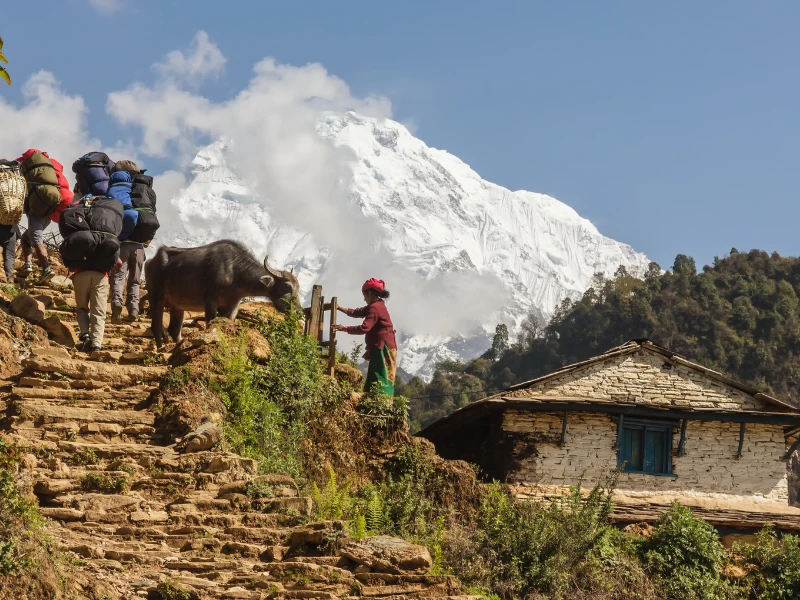
After breakfast, we drive to Nayapul, the starting point of our trek. From there, a gentle walk leads through the charming villages of Birethanti and through lush terraced fields, giving your legs a soft introduction to trekking. Arriving in Tikhedhunga, a small mountain village, you will feel the serenity and simplicity of rural Nepal. The surrounding hills and terraced landscapes offer a sense of tranquility, and your evening will be spent enjoying local hospitality and preparing for the steeper ascents ahead.
Today’s trek involves a challenging but rewarding ascent through the village of Ulleri, renowned for its long staircase of over 3,200 stone steps. Passing through dense rhododendron forests, the trail gradually opens up to reveal spectacular views of the Annapurna and Dhaulagiri ranges. Arriving in Ghorepani, a small village perched at 2,860 meters, you can enjoy the crisp mountain air and prepare for the early morning climb to Poon Hill. The village’s simple lodges and local culture make for a cozy evening amid breathtaking surroundings.
Rise early for the unforgettable sunrise at Poon Hill, one of the most famous viewpoints in the Annapurna region. From this vantage point, watch the golden light illuminate peaks like Annapurna South and Dhaulagiri. After descending to Ghorepani for breakfast, continue trekking through rhododendron forests and peaceful trails toward Tadapani. Along the way, enjoy stunning panoramic views and the sound of flowing streams, creating a serene trekking experience. Tadapani, nestled in nature, offers a quiet evening with panoramic mountain vistas.
Descend gradually to Kimrong Khola, crossing suspension bridges over rushing rivers, before ascending toward Chhomrong village. Chhomrong is a picturesque settlement that sits at the base of Machapuchare (Fishtail) and Annapurna South, offering extraordinary views of these iconic peaks. Wander through the terraced fields and interact with locals, gaining insight into traditional mountain life. The evening is perfect for enjoying a warm meal while watching the sun set behind the towering peaks, a peaceful pause before higher elevations ahead.
Leaving Chhomrong, descend to the Chhomrong Khola and then ascend through dense forests, passing the villages of Sinuwa and Bamboo. The trail is surrounded by lush rhododendron and bamboo forests, creating a sense of immersion in nature. Arriving at Deurali, the air grows crisper, and mountain vistas become increasingly dramatic. The small settlement offers a cozy spot to rest, with towering peaks visible from the lodge. The sense of remoteness and tranquility heightens, preparing trekkers mentally and physically for the approach to the base camp.
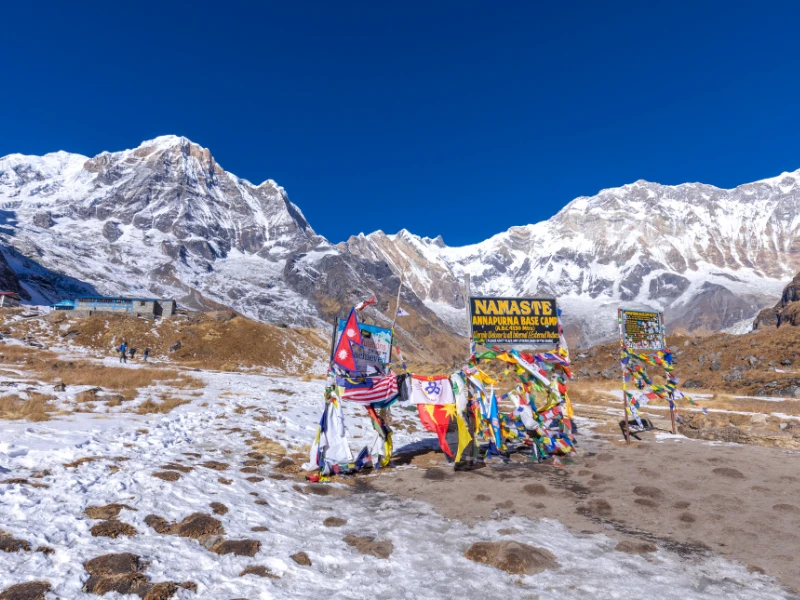
This is the pinnacle of the trek. We traverse glacial valleys and rocky trails, passing the Machapuchare Base Camp, where the majestic Fishtail Mountain dominates the skyline. The final stretch leads to the Annapurna Base Camp, surrounded by towering peaks like Annapurna I, Machapuchare, Hiunchuli, and Gangapurna. Standing amidst the glacial amphitheater, you can absorb the awe-inspiring landscape, feel the power of the mountains, and celebrate reaching one of the world’s most famous trekking destinations. Evening brings calm with a stunning star-filled sky.
After a peaceful morning at Annapurna Base Camp, begin the descent back through Machapuchare Base Camp and Deurali, retracing the trail through the scenic Himalayan valleys. Pass through the familiar forests of Sinuwa and Bamboo, allowing your body to relax into the descent while continuing to take in magnificent views. Bamboo provides a welcoming spot to rest and reflect on the previous day’s achievement, offering a mix of serenity, local hospitality, and mountain landscapes that leave a lasting impression.
Continue descending past Chhomrong and Sinuwa, winding through terraced fields and village paths toward Jhinu Danda. This small settlement is famous for its natural hot springs along the Modi River. Arriving in the afternoon, you can soak your tired muscles in the warm waters while enjoying views of the surrounding hills and mountains. The soothing experience rejuvenates the body and mind, offering a perfect balance between adventure and relaxation before the final days of trekking.
On the final day of trekking, traverse the familiar paths through terraced fields and picturesque villages, descending to Nayapul. From this point, a scenic drive takes you back to Pokhara, where you can unwind and celebrate the completion of your trek. The evening is free to explore Lakeside, enjoy local cuisine, or simply rest at your hotel, reflecting on the extraordinary journey through the Annapurna region organized by Mission Nepal Holidays.
After breakfast, drive or fly back to Kathmandu. Depending on your departure schedule, you may have time for last-minute shopping or sightseeing, visiting local markets or cultural sites. Mission Nepal Holidays ensures a smooth transfer to Tribhuvan International Airport for your onward journey, leaving you with memories of the majestic Annapurna Base Camp trek and the vibrant culture of Nepal.
Not satisfied with this itinerary? Make your own.
Plan My Trip

Includes

  • Pick-up or Drop-off service from and to Airport
  • All ground Transportation
  • 3 meals a day during trekking trails
  • Transportation, food, accommodation and insurance of Guide during the trip
  • Down jacket, all-season sleeping bag, duffel bag and trekking map (in case if you don’t have your own. Down jacket, sleeping bag and duffel bag must be returned after completion of the trip)
  • First Aid Medical Kit (Your guide will carry the Medical Kit, but we also advise to bring yourself for your own use, as far as possible)
  • All the required permits and paperwork

Doesn't Include

  • International Airfare
  • Visa Charges
  • Hotel In Kathmandu
  • Your travel and medical insurance
  • Personal Expenses such as shopping, bar bills, hot shower, telephone, laundry, titbits etc
  • Foods for major cities (Kathmandu & Pokhara)
  • Services not mentioned as per Itinerary
  • Emergency expenses such as expenses on chartered helicopter

Upcoming Departure Dates

Your Start Date is the day you land in Nepal, and your End Date is when you fly home.

If the set Annapurna Base Camp Trek group dates don’t suit your schedule, we can offer alternative dates upon request.

,
Select a starting date

Packing List

Proper layering is key to staying warm and comfortable in rapidly changing Himalayan weather.

  • Base layers (thermal tops and bottoms): Keep your body warm during cold mornings and higher altitudes.
  • Trekking shirts (quick-dry): Prevent sweat buildup and keep you comfortable while hiking.
  • Fleece jacket or mid-layer: Provides essential insulation between your base layer and outer shell.
  • Insulated down jacket: A must for cold evenings and nights at higher camps.
  • Waterproof & windproof shell jacket: Protects against rain, snow, and strong winds.
  • Trekking pants (lightweight + insulated pair): One pair for warmer days and one for chilly sections.
  • Waterproof pants: Useful during unexpected weather changes.
  • Warm hat/beanie & sun hat: For cold mornings and protection from strong UV rays.
  • Buff/neck gaiter: Shields against dust, wind, and cold air.
  • Inner gloves & insulated outer gloves: Keep your hands warm and functional at altitude.
  • Warm trekking socks (4–5 pairs): Helps avoid blisters and keep feet warm.

Comfortable, reliable footwear ensures a smooth trekking experience.

  • Trekking boots (broken-in): Provide ankle support and protection on rocky terrain.
  • Camp shoes/sandals: Let your feet rest after a long day of walking.
  • Gaiters: Useful in snowy or muddy conditions.
  • Microspikes (optional): Helpful during early spring or late autumn when trails may be icy.
  • Trekking poles: Reduce impact on knees and improve balance on steep sections.

The right gear ensures safety, comfort, and preparedness throughout the trek.

  • Backpack (40–50L) with rain cover: Enough space for your daily essentials.
  • Sleeping bag (–15°C to –20°C comfort): Nights can get extremely cold, especially in high-altitude mountain areas.
  • Headlamp with extra batteries: Essential for early morning hikes and navigating in low-light mountain areas.
  • Water bottles or hydration bladder (2L): Staying hydrated is crucial at altitude.
  • Water purification tablets/filter: Safe drinking water options in teahouses are limited.
  • Sunglasses (UV400): Protect your eyes from strong glare and snow reflection.
  • Dry bags or stuff sacks: Keep your clothes and electronics dry and organized.
  • Camera/phone + power bank: Charging is limited and often requires extra cost.

Lightweight but essential items that keep you clean, healthy, and comfortable.

  • Sunscreen (SPF 50+) & lip balm: Harsh UV rays increase with altitude.
  • Personal medications: Include altitude tablets, anti-nausea meds, and any prescriptions.
  • Basic first aid kit: Blister care is especially important for long trekking days.
  • Hand sanitizer & wet wipes: Helpful where warm water is limited.
  • Quick-dry towel: Compact and easy to carry.
  • Moisturizer: The dry mountain air can crack lips and skin.
  • Toothbrush/toothpaste, soap/shampoo: Travel-sized is ideal.

Always keep important items easily accessible and protected.

  • Passport & trekking permits: Required at checkpoints throughout the region.
  • Travel insurance: Must include high-altitude helicopter evacuation.
  • Cash (Nepalese Rupees): Needed for charging, Wi-Fi, hot showers, and personal expenses.
  • Snacks/energy bars: Great for quick boosts during long days.
  • Notebook or diary: Many trekkers enjoy recording their journey.
  • Lightweight book/Kindle: Perfect for downtime in teahouses.
Why Book with Us?
  • Excellent customer service. Our travel experts are ready to help you 24/7.
  • Best price guaranteed.
  • No credit card or booking fees.
  • 100% financial protection.
  • Environmentally-friendly tours.

Successful to Achieve ABC sucessfull

Thank you so much to Arjun & Shree for great Services & wonderful day trekking from Gandruk to ABC base - ABC -to Gandruk 2 way camp & i really Enjoy it and having a great memories in one time in my life time journey. Arjun & Shree was The great & 1st Class guide was very very helpful, supportive, caring & take care all safety during My trek and make it successful to achieve ABC Sucessfully ….🥰 They are like My brothers Thank you & Thank You

Radha Kumari
Radha Kumari
United States

ABC by Mission Nepal-Excellent!

Today, *20th October 2024 ends our 7th Annapurna Base Camp Trip* This trip was beautifully arranged by Mission Nepal, www.missionnepal.com my regular ground agent in Kathmandu. From airport Pickup, return flights to Pokhara & the entire expedition with 2 guides & 6 porters for my team of 15 pax, it was an amazing journey to the heart of Annapurna Sanctuary. Mr *Damodar Dhakal*, the MD of Mission Nepal personally arranged everything to our expectation and satisfaction. Our Kailash trip June 2024 was also arranged in this splendid style, nothing went wrong, Damodar was always on call, even helicopter rescued one team from Tibet. Mission Nepal has offices in *Nepal, Dubai, USA & Australia and January 1st 2025, begins operation in Malaysia.* Thank you, Sir, it was indeed a pleasure to have met you and enjoy your great services, looking forward to our upcoming 7th Everest Base Camp and 2nd Kailash Trip and many other trips in 2025. Thank you and God Bless.

Ganeshan S Pilley
Ganeshan S Pilley
Malaysia
See more reviews

Frequently Asked Questions

General & Essential Info

Annapurna Base Camp is a Grade B or a moderately difficult trekking route. So any fit person can do this trek, even if you do not have any previous experience. You should be aware of what to expect and mentally prepare for it. Then, as long as you will too, you can.

On average, you walk about 4 to 6 hours per day. One or two days can be as less as 3hrs and one or two days can be as long as 7hrs.

The highest altitude reached is 4190m. This is the elevation of Annapurna Base Camp. ABC is the highest we will climb in this trek.

Yes, you can charge batteries en route. Charger should be brought. There are hot shower facilities as well. You may have to pay a certain amount for both ($1-$2). Negotiate. Also, a hot water facility could be free at a lower elevation.

No. There are no ATMs on this trek route. You will have to draw enough cash in Pokhara or Kathmandu. There are a number of ATMs in these cities. Everything is paid in Nepali rupees. So money should be exchanged before the start of the trek.

Yes. The Internet can be accessed in most places. Sometimes, there might be some technical problems. The Internet in Nepal is not as fast as you are used to and at times you can just lose connection.

Guides, Support & Safety

Not really. It depends on you. If you want, ABC trekking can be done independently. You could hire a guide and a porter by yourself instead of going through an agency or not hire a guide at all. Although, not having a guide can be a little problematic during the offseason.

It really depends on you. Is it your first time in Nepal? How confident are you of being able to find your way around? How pressed on time are you? If you go through an agency, it will be costlier but everything will be planned. You will only have to come, trek and return.

For the Annapurna region, pay for guides range from $20 to $30 per day and porters take $15 to $25 per day.

Plan my Trip Whatsapp Book Now
We use cookies to enhance your experience on our website. By continuing to browse, you agree to our use of cookies.