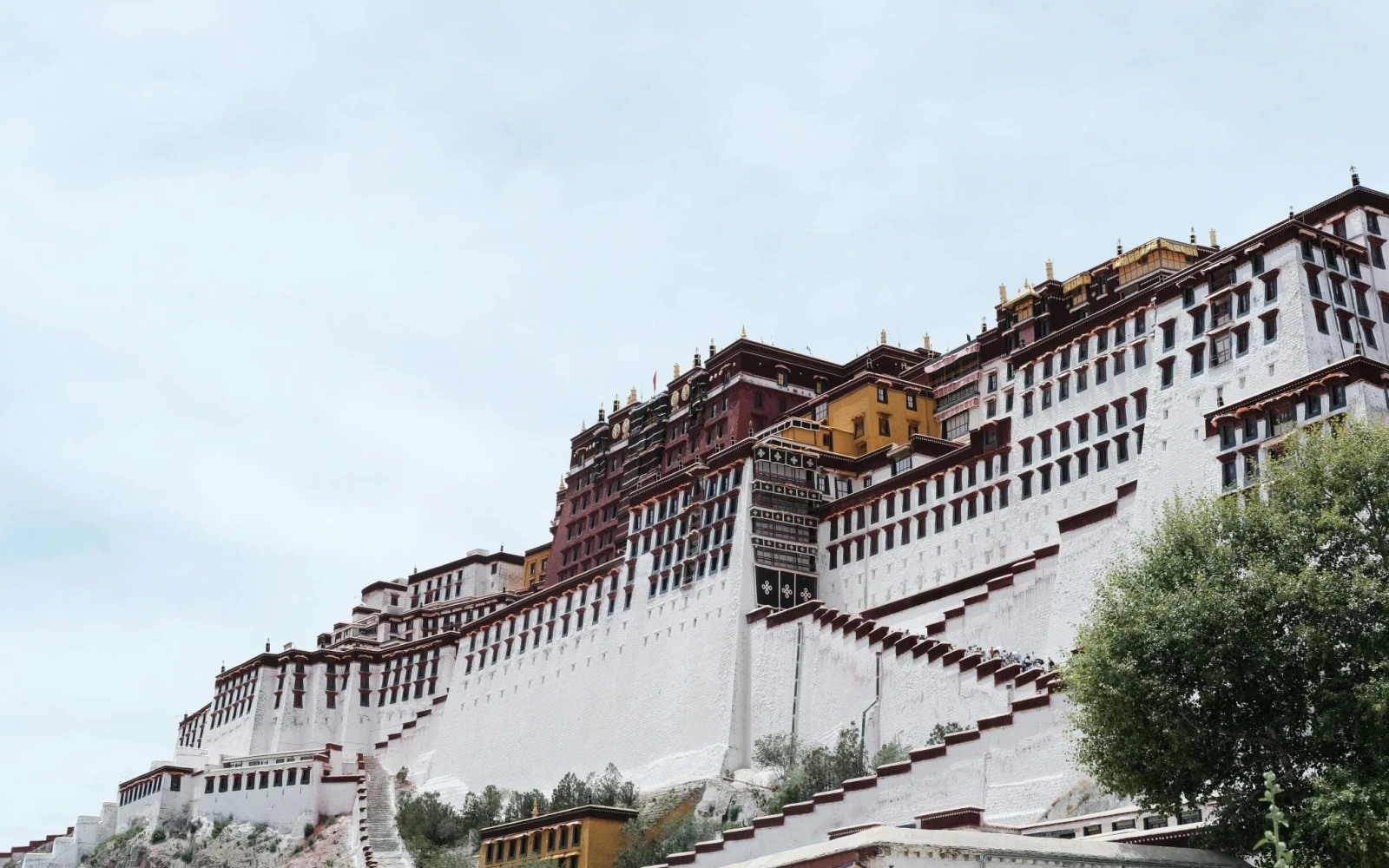
Tibetan architecture is a distinctive style that reflects the rich cultural heritage, spiritual traditions, and unique environmental conditions of Tibet. This architecture is not only practical and functional, but it also embodies the profound spiritual beliefs of the Tibetan people, particularly Buddhism. Over centuries, Tibetan architects and builders have developed a style that harmonizes with the natural landscape, adapting to the extreme conditions of the high-altitude plateau while maintaining a deep connection to the sacred.
Tibetan buildings, from humble homes to magnificent monasteries and palaces, feature an extraordinary blend of local materials, symbolism, and a deep connection to the surrounding environment. Tibetan architecture serves not only as shelter but as a physical manifestation of the Tibetan worldview—where every element is infused with meaning, tradition, and a respect for the spiritual realms. In this blog, we will explore the history of Tibetan architecture and highlight ten major historical sites that exemplify the beauty, innovation, and cultural significance of this architectural style.
A Brief History of Tibetan Architecture
The history of Tibetan architecture dates back to the 7th century when the Tibetan Empire was established under King Songtsen Gampo. His reign marked the beginning of Tibetan Buddhism’s influence on architecture, which shaped the design of buildings throughout Tibet and its surrounding regions. Tibetan architecture evolved with the arrival of Buddhism, leading to the construction of stupas, monasteries, and temples designed for meditation and communal rituals.
The structures were built to withstand the harsh environment of the Tibetan plateau—extreme cold, strong winds, and earthquakes. As a result, the buildings were designed with thick stone walls, flat roofs, and compact, low-rise structures that retained warmth. Over time, the architectural style blended traditional Tibetan methods with influences from neighboring regions such as India, Nepal, China, and Bhutan.
The advent of the Dalai Lama system in the 14th century also led to the construction of palaces, which showcased a fusion of local Tibetan elements and Chinese imperial style. The unique beauty of Tibetan architecture can be seen in these historical sites, each telling a story of the land’s culture, religion, and people.
10 Major Historical Sites of Tibetan Architecture
Potala Palace (Lhasa, Tibet)
- Overview: The Potala Palace, a UNESCO World Heritage Site, is one of the most iconic examples of Tibetan architecture. Built on Red Mountain, it was the winter residence of the Dalai Lama until the 14th Dalai Lama fled to India in 1959.
- Architectural Significance: The palace combines traditional Tibetan architectural elements with influences from Han Chinese design. Its white and red walls represent the secular and spiritual aspects of Tibet, while its intricate mandala-like layout symbolizes the cosmos. The Potala is a complex of over 1,000 rooms, including chapels, shrines, and living quarters for monks and the Dalai Lama.
- Historical Significance: Potala Palace stands as a symbol of Tibetan political and religious power, as well as the spiritual heart of Tibetan Buddhism.
Jokhang Temple (Lhasa, Tibet)
- Overview: The Jokhang Temple is Tibet’s holiest religious site, built during the reign of King Songtsen Gampo in the 7th century. It is revered by Tibetan Buddhists and visited by thousands of pilgrims each year.
- Architectural Significance: The temple’s design is a fusion of Tibetan, Indian, and Nepalese architectural styles, particularly with its Buddhist stupas and pagoda-style roofs. The use of timber, stone, and gold leaf reflects Tibetan craftsmanship and religious symbolism.
- Historical Significance: The temple houses the Jokhang Buddha, a statue brought to Tibet by Princess Wencheng, which is a sacred relic in Tibetan Buddhism.
Sera Monastery (Lhasa, Tibet)
- Overview: Sera Monastery is one of the three great Gelugpa monasteries in Tibet, founded in 1419 by Jamchen Chojey. The monastery is located just north of Lhasa and is known for its academic and monastic traditions.
- Architectural Significance: Sera’s architecture is designed for both worship and study, with its chapels, study halls, and residential quarters arranged around central courtyards. The style is characterized by large, open spaces, decorative murals, and bright colors.
- Historical Significance: Sera is famous for its debating monks and serves as a hub for philosophical study. It also has significant historical ties to the Dalai Lama’s religious lineage.
Tashilhunpo Monastery (Shigatse, Tibet)
- Overview: Founded in 1447 by the first Dalai Lama, Tashilhunpo Monastery is located in Shigatse, Tibet’s second-largest city. The monastery complex houses the Panchen Lama’s seat and is a center of Tibetan Buddhism.
- Architectural Significance: The monastery has expansive prayer halls, stupas, and residential buildings. Its design is a blend of Tibetan and Han Chinese styles, with golden roofs and brightly painted interiors.
- Historical Significance: Tashilhunpo Monastery has been the seat of the Panchen Lama lineage, and it serves as an important site for religious pilgrimage.
Samye Monastery (Tibet)
- Overview: Samye Monastery, founded in the 8th century, is one of Tibet’s earliest and most influential Buddhist monasteries. It was the first monastery built in the style of a mandala, symbolizing the universe.
- Architectural Significance: The monastery is a four-cornered design with a central temple representing Mount Meru, the center of the world in Buddhist cosmology. The building materials include stone and wood, and the structure’s layout is symbolic of Buddhist cosmology.
- Historical Significance: Samye played a pivotal role in the spread of Buddhism to Tibet and is considered one of the four great monasteries of Tibetan Buddhism.
Norbulingka (Lhasa, Tibet)
- Overview: Norbulingka is the traditional summer palace of the Dalai Lamas and a beautiful example of Tibetan palace architecture.
- Architectural Significance: The palace complex consists of gardens, temples, and pavilions, and is designed to blend seamlessly with the surrounding natural environment. The wooden structures and elaborate frescoes reflect Tibetan artistic traditions.
- Historical Significance: Norbulingka served as the Dalai Lama’s residence for nearly two centuries and is a symbol of the Tibetan ruler’s connection to the land.
Ganden Monastery (Tibet)
- Overview: Ganden Monastery, founded in 1409 by Je Tsongkhapa, is one of the earliest and most important monasteries in the Gelug tradition of Tibetan Buddhism.
- Architectural Significance: The monastery is built on a mountain with breathtaking views and consists of prayer halls, meditation caves, and residential quarters for monks. The architecture incorporates traditional Tibetan design elements such as golden roofs and stone walls.
- Historical Significance: Ganden Monastery is one of the three main monasteries of the Gelug tradition, alongside Sera and Drepung, and is a center for religious learning and debate.
Drepung Monastery (Lhasa, Tibet)
- Overview: Drepung Monastery, founded in 1416, was once the largest monastery in Tibet and is one of the three great Gelugpa monasteries.
- Architectural Significance: The monastery’s architecture is grand and imposing, with large assembly halls, stupas, and temples designed for communal worship and philosophical study. The buildings are organized in terraced layers on the side of a hill.
- Historical Significance: Drepung served as the primary seat of the Dalai Lama before the Potala Palace became the residence of the spiritual leader. It is an important center of Tibetan monastic life.
Rongbuk Monastery (Mount Everest, Tibet)
- Overview: Rongbuk Monastery is the highest monastery in the world, located near the base camp of Mount Everest.
- Architectural Significance: The monastery’s simple Tibetan architecture is functional, with buildings made of wood and stone, designed to withstand extreme cold and high-altitude conditions.
- Historical Significance: Rongbuk has historical significance as a pilgrimage site for Buddhists, offering panoramic views of Everest, which is considered sacred by many Tibetan Buddhists.
The Labrang Monastery (Amdo, Tibet)
- Overview: Labrang Monastery is one of the six great monasteries of the Gelug school of Tibetan Buddhism and is located in the Amdo region of northeastern Tibet.
- Architectural Significance: Labrang is known for its massive central prayer hall, chapels, and residential quarters. Its complex design features Tibetan-inspired wooden structures and traditional murals depicting Buddhist deities.
- Historical Significance: Labrang has long been a center of Tibetan learning, with thousands of monks practicing here. It also played a crucial role in the region’s political and religious history.


