
Lukla, Namche Bazaar and Phakding in the Everest Region
2 Jan 2026
The Everest region of Nepal, officially known as the Khumbu region, is one of the most iconic and breathtaking destinations in the world. Home to Moun...

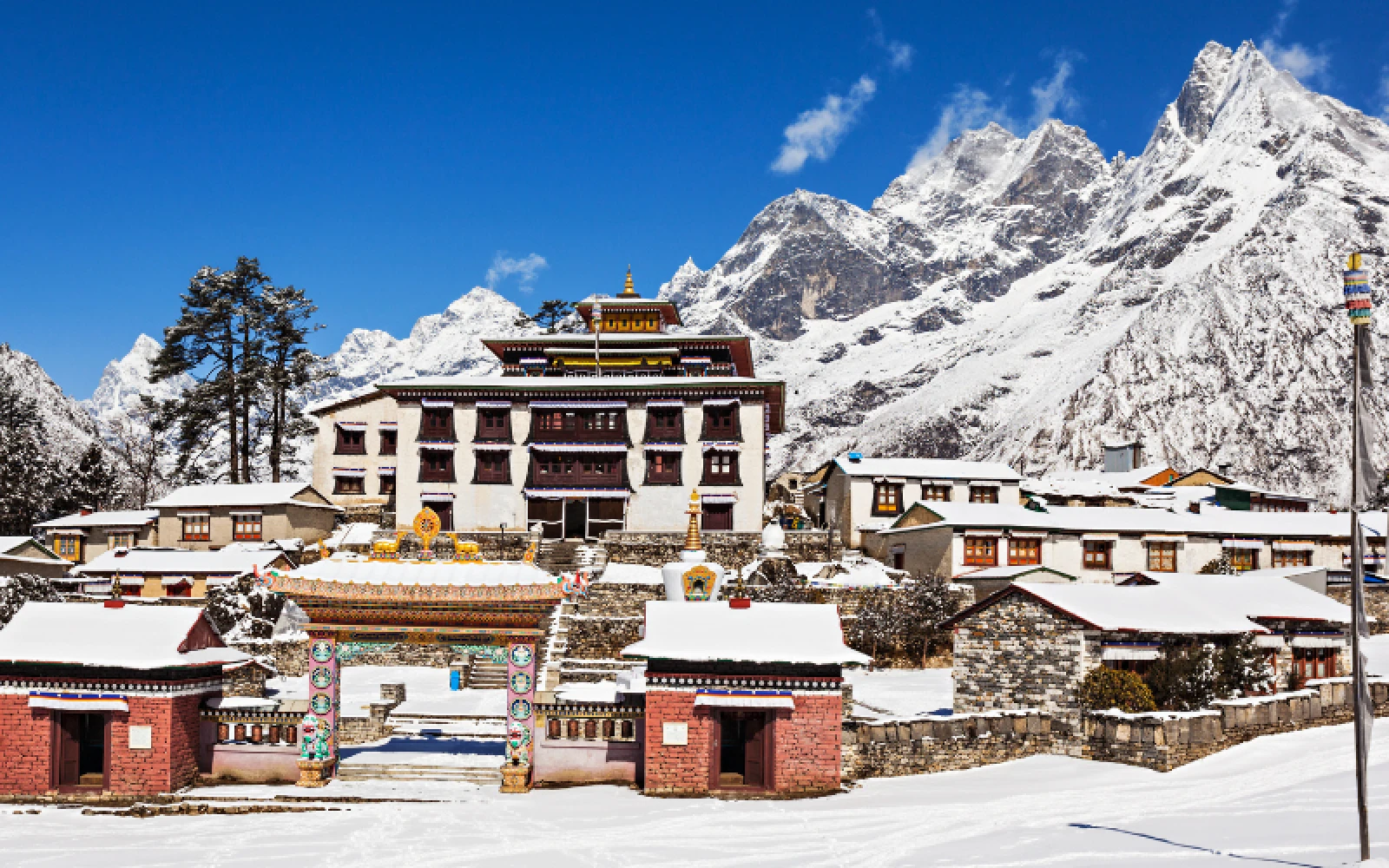
Nestled at an altitude of 3,867 meters (12,687 feet) in the Khumbu Valley, Tengboche Monastery is one of the most iconic spiritual landmarks in the world. Known as the highest monastery in the world, it serves as both a center of Buddhist devotion for the Sherpa people and the symbolic gateway for trekkers heading toward Everest Base Camp (EBC). Its striking white walls, golden rooftops, and fluttering prayer flags seem almost suspended in the sky, framed by the towering Himalayan giants: Ama Dablam, Lhotse, Nuptse, and Mount Everest.
For many trekkers, arriving at Tengboche is more than just a stop—it is a profound moment where the journey becomes spiritual as well as physical. The sound of chanting monks, the rhythmic turning of prayer wheels, and the crisp Himalayan air combine to create a sense of serenity and reflection that stays with travelers long after they leave. With Mission Nepal Holidays, the leading adventure travel company in the Himalaya, trekkers can experience this sacred site in a safe, immersive, and unforgettable way.
Tengboche Monastery was founded in 1916 by Lama Gulu, a revered Buddhist master, who recognized the spiritual significance of this high Himalayan ridge. Its location was chosen deliberately for both its natural beauty and its ability to inspire devotion. Over the decades, Tengboche has grown to become the largest and most influential monastery in the Everest region, a center for religious practice, cultural preservation, and community life.
Despite facing adversity, including devastating fires in 1934 and 1989, the monastery has been rebuilt each time with remarkable dedication, reflecting the resilience of the Sherpa people and their deep devotion to Buddhist teachings. Today, it stands as a symbol of perseverance and spiritual strength.
Inside the monastery, trekkers can marvel at ancient thangkas (sacred paintings), intricate statues, and sacred relics, each telling a story of faith and Himalayan culture. The monastery preserves centuries of spiritual tradition while remaining a living center of worship, where monks continue to study, meditate, and conduct daily rituals.
Life at Tengboche revolves around Buddhist rituals and monastic practice. Monks rise early to chant prayers, spin prayer wheels, and perform ceremonies designed to promote peace, protection, and spiritual growth. The atmosphere inside the prayer hall, filled with the scent of butter lamps and incense, encourages a sense of calm, introspection, and connection to the mountains.
The monastery is also renowned for the Mani Rimdu Festival, celebrated annually in autumn. Over several days, masked dances, ceremonial rituals, and prayers depict the triumph of good over evil. Locals from across the Khumbu Valley come to participate, and trekkers visiting during this time are offered a rare glimpse into a living tradition that combines spiritual devotion with communal celebration. Observing these rituals allows trekkers to connect with the Sherpa worldview, in which the mountains are revered as sacred protectors rather than mere obstacles.
Most Everest Base Camp treks begin with a scenic flight from Kathmandu to Lukla, an experience known for its thrilling approach amidst towering cliffs and snow-capped peaks. From Lukla, trekkers follow trails along the Dudh Koshi Valley, crossing glacial rivers, suspension bridges, and lush pine forests. Villages such as Phakding provide rest stops and a first glimpse of local life.
The next major stop is Namche Bazaar, the cultural and trading hub of the Khumbu. Here, trekkers can enjoy local markets, cafes, and panoramic views of peaks like Everest and Ama Dablam. Namche is also an essential acclimatization point, giving trekkers a chance to adjust to the higher altitude and minimize the risk of Acute Mountain Sickness (AMS).
From Namche, the trek gradually ascends through rhododendron forests, terraced slopes, and alpine meadows, offering expansive views of snow-draped peaks. As the monastery comes into view, its serene presence amid towering mountains creates a sense of awe. Many trekkers describe reaching Tengboche as the moment the Everest journey truly begins—not just as an adventure, but as a spiritual and cultural experience.
Accommodation near Tengboche is primarily through teahouses, offering simple yet cozy lodging with hearty meals. These lodgings provide the comfort needed for high-altitude trekking while allowing trekkers to enjoy panoramic Himalayan views. Traditional meals such as dal bhat (lentils and rice), thukpa (noodle soup), and yak stew provide the necessary nutrition for the journey ahead.
Evenings at Tengboche are ideal for reflection. Trekkers can sit quietly in the monastery courtyard, meditate, or simply absorb the calm of the surroundings. Watching the monks perform their evening prayers while the mountains glow in the sunset creates a sense of peace and connection that is difficult to find anywhere else.
From Tengboche, the trail continues through Dingboche, Lobuche, and finally Gorak Shep, the last settlement before Everest Base Camp (5,364 meters / 17,598 feet). Along the way, trekkers encounter dramatic landscapes including glaciers, moraine fields, and high-altitude ridges, where every step challenges the body and inspires the soul.
A trek to Kala Patthar (5,545 meters) offers arguably the most iconic view of Everest. Watching the sunrise illuminate Everest and the surrounding peaks from this vantage point is a moment of awe, reflection, and accomplishment, rewarding the physical and spiritual effort of the trek.
Tengboche is both a physical and spiritual gateway. Geographically, it marks the transition from the lower Khumbu valleys to high-altitude Himalayan terrain. Culturally, it immerses trekkers in Sherpa traditions, Buddhist philosophy, and the sacredness of the mountains.
The monastery teaches humility, respect, and mindfulness, shaping the trekker’s perspective before the high-altitude challenges ahead. Every trekker who pauses at Tengboche experiences a connection to the mountains, culture, and inner self that transforms the trek from a physical journey into a holistic adventure of the mind and spirit.
Along the trail to Tengboche, trekkers pass through numerous Sherpa villages, where stone houses, mani walls, and colorful prayer flags tell stories of centuries-old traditions. Villagers warmly welcome travelers, offering insights into daily life, spiritual practice, and local customs.
Local cuisine provides an authentic taste of the Khumbu: dal bhat, thukpa, and yak meat stew fuel trekkers while allowing them to experience Himalayan culinary culture. Observing the monks at Tengboche performing prayers and rituals gives visitors a firsthand glimpse into Buddhist monastic life, deepening their understanding of Sherpa culture and the spiritual significance of the Himalayas.
Altitude and Acclimatization: Spend extra days at Namche Bazaar to adjust. Stay hydrated and monitor for Acute Mountain Sickness (AMS).
Respect Local Culture: Remove shoes before entering temples, maintain silence during rituals, and dress modestly.
Best Time to Visit: Spring (March–May) for blooming rhododendrons and clear skies, or Autumn (Sept–Nov) for stable weather and festival experiences.
Physical Preparation: Trekking involves 5–8 hours per day over uneven terrain, often at high altitude. Cardiovascular endurance and leg strength are important, along with preparation for changing weather conditions.
Choosing the right trekking company ensures a safe, enjoyable, and meaningful journey. Mission Nepal Holidaysspecializes in tailored Everest Base Camp treks, offering unparalleled expertise and local knowledge.
With Mission Nepal Holidays, trekkers can focus on the adventure, culture, and spiritual experience, knowing that every logistical detail is expertly managed.
“Tengboche changed the way I see the mountains. It is a place of quiet strength and spiritual connection. Every trekker should pause here.” – Anna C., UK
“I came to Everest for adventure, but Tengboche gave me perspective. The monks, the mountains, the culture—it transformed my journey.” – Raj P., India
Stories like these highlight the unique blend of adventure, culture, and spirituality that Tengboche offers, making it the most memorable part of the Everest Base Camp trek for many travelers.
Tengboche Monastery is far more than a scenic stop—it is a spiritual gateway, a cultural treasure, and a place for reflection, growth, and inner peace. It prepares trekkers not just for the physical challenges of Everest Base Camp, but for a journey of the heart and mind.
With Mission Nepal Holidays, your trek to Tengboche and beyond is safe, immersive, and unforgettable. From the fluttering prayer flags to the sunrise over Everest, every moment at Tengboche is a step toward adventure, self-discovery, and spiritual connection.

The Everest region of Nepal, officially known as the Khumbu region, is one of the most iconic and breathtaking destinations in the world. Home to Moun...

Everest Base Camp Trekking in April with Tilak, organized by Mission Nepal Holidays, is one of the most rewarding and memorable trekking experiences i...

Nepal trekking in October is widely recognized as the best trekking experience in the Himalayas, attracting thousands of trekkers, mountaineers, photo...


